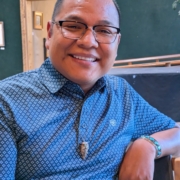
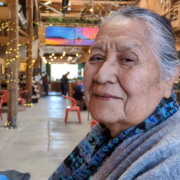
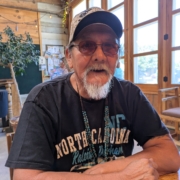
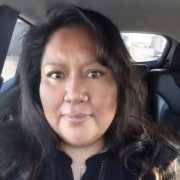
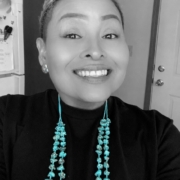
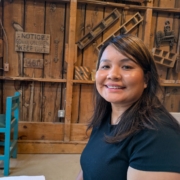
Joey Tsosie, Gloria Dennison, Raymond Deal, Elvira Dennison, Bernina Sandoval, and Tara Lynn Tsosie
Navajo Family Voices is a program of Indian Country Grassroots Support, whose staff, consultants and board provide support, advice, checks and balances in a lateral and agile framework.
Throughout my career, I have had the privilege of walking beside Diné families, children, youth, adults, and elders living with disabilities and special health care needs. Every family has a different story, but one thing has remained the same our people are resilient. They continue to fight despite facing barriers that many people never see.
On the Navajo Nation, we serve relatives living with autism, traumatic brain injuries, intellectual and developmental disabilities, cerebral palsy, schizophrenia, mental health conditions, physical disabilities, chronic illnesses, sensory disabilities, rare genetic conditions, and many other health care needs. Behind every diagnosis is a person, a family, and a community trying to navigate systems that were never designed with them in mind.
Over the years, I have often found myself asking a simple question:
“How can we do better for our people?”
That question comes from experience.
Earlier in my career, I worked in positions where we received referrals from families across the Navajo Nation. We listened to their stories, completed assessments, gathered updates, filed reports, and documented their situations for monthly reporting. The work was important, but something always felt incomplete.
Many families needed far more than paperwork.
They needed someone to help them apply for benefits.
They needed transportation to medical appointments.
They needed assistance finding housing modifications, wheelchair ramps, Medicaid Waiver services, guardianship resources, educational advocacy, behavioral health services, respite care, or simply someone willing to sit with them and listen without rushing the conversation.
Unfortunately, heavy caseloads, staffing shortages, strict reporting deadlines, and limited resources often meant that families received only brief follow-up before the next report was due. Many dedicated staff wanted to do more, but the system often left little time to provide the hands-on support families truly needed.
I also witnessed another challenge while working with organizations outside the Navajo Nation. Too often, success was measured by meeting grant goals and collecting data rather than ensuring families actually received the help they needed. Native families were sometimes referred elsewhere under the assumption that tribal programs would meet every need. While the Navajo Nation has many dedicated departments and programs, families frequently encounter barriers such as eligibility requirements, long wait times, staffing shortages, transportation challenges, communication gaps, or uncertainty about where to begin.
Transportation remains one of the greatest barriers across our Nation. Many disability services are located in border towns or regional offices that may be hours away from the communities they serve. Families without reliable transportation often miss appointments, delay services, or stop seeking help altogether because the process becomes overwhelming.
Communication between agencies can also be difficult. Referrals may be sent from one office to another, paperwork may need to be resubmitted, and families are often left waiting without knowing the status of their request. Many community members simply give up after being redirected multiple times.
One concern I continue to think about is how disconnected many of our support systems can become. Our Chapter Houses, Community Health Representatives (CHRs), schools, behavioral health providers, hospitals, tribal programs, nonprofit organizations, and state agencies all work hard within their own responsibilities, yet they do not always work together in ways families can easily understand or access. Families should not have to navigate every system on their own.
Despite these challenges, I remain hopeful.
At Navajo Family Voices, I believe our role goes beyond sharing information. We are here to help families navigate complex systems, connect them with resources, build partnerships, advocate alongside them, and ensure that every family knows they are not alone.
For me, disability advocacy is not just about services or programs.
It is about restoring dignity.
It is about building relationships.
It is about making sure every Diné relative, regardless of age, sex, diagnosis, or ability has the opportunity to live with respect, independence, belonging, and hope.
The question I continue to ask myself is the same one that first inspired me to do this work:
“How can we do better for our people?”
I believe the answer begins when we stop working in separate systems and start walking together alongside the families we serve.
— Joey Tsosie. Diné Bá Álchíní Yił Ádaaní (Navajo Family Voices)
(505) 226-3073
POB 3085, Kirtland, NM 87417
and POB 744, Farmington, NM 87499