
The Healthcare Advisory Committee guides Navajo Family Voices in integrating traditional Diné healing with clinical care. Members advise on educational approaches that honor Diné cosmology and relational balance, ensuring our programs support the whole person—mind, body, community, and spirit. Their guidance includes defining the philosophical framework for integration, designing a curriculum on Diné cosmology and health, ensuring community and cultural accountability, building clinical partnerships, and guiding the development of a complementary care systems template.

Leland Grass is president of the Diné Medicine Men Association Inc.. He is a medicine man, traditional practitioner, and advocate for the sacred place of animals in Diné culture and healing ceremonies. He is a former pro-tem for the Na’hoo’ka’ Diné (Earth Surface People), a traditional council of medicine men that predates the 1868 treaty with the United States. He is a traditional circle dance singer and conducts seminars teaching people how to gentle and understand horses as healers and vehicles for transmitting spiritual and cultural traditions to Navajo youth.
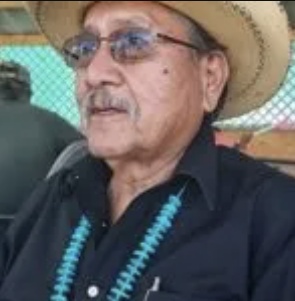
David H. Begay, Ph.D. bridges Diné healing and clinical medicine. His work has long explored the connections between Diné cosmology—rooted in the immutable law of beehaz’áanii and the principles of relational balance—and the insights of quantum science, which view the interconnectedness of all consciousness and matter. Apprenticed in his youth to a traditional healer and a member of the Diné Hataałii Association for over 25 years, Dr. Begay served on the Navajo Nation Human Research Review Board for 23 years as the designated representative for traditional healing. He is Associate Research Professor at the University of New Mexico College of Medicine and Pharmacy, former faculty at Northern Arizona University (Physics & Astronomy), and former academic dean and vice president at Diné College. He serves as Vice President of the Indigenous Education Institute. Dr. Begay has worked on federal projects with NASA, JPL, Goddard Space Flight Center, NIH, and NSF for over 25 years. A disabled Vietnam combat veteran, he is recognized as a tribal elder and provides cultural consultation to organizations and corporations nationally and internationally.
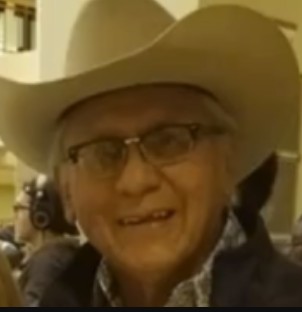
Daniel Tso was born in the Torreon/Starlake area near the headwaters of the Chaco Wash. He was Council Delegate to the Navajo Nation Council from 1986-95 and from 2019-23, representing Eastern Navajo communities. He has chaired the Counselor Health Impact Assessment – K’é Bee Hózhǫǫgo Iiná Silá Committee, which is a committee of researchers that monitors the public health, cultural, and spiritual impacts of fracking in the Navajo Nation Chapters of Counselor, Ojo Encino, and Torreon/Starlake, in the Greater Chaco Landscape. Daniel is a Indian Country Grassroots Support steward.
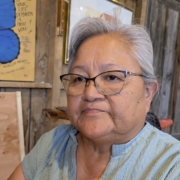
Gloria Benally is Hashłishnii, born for Bitahni, maternal grandpa is Tòdichini, paternal grandpa is T’abaha. She was raised by a group of medicine men as far back as she can remember—her nálí hastiin (paternal grandfather), her father, and all her father’s brothers. She was her father’s apprentice from the age of 13. She has coordinated the restorative justice program in the Navajo Nation Judicial Branch, working to teach Diné bi beehaz’áanii within a system that often struggles to accommodate traditional frameworks, while never ceasing to learn and teach traditional practice. With the Diné people facing such difficulties within the health and court systems, Gloria serves on the Healthcare Advisory Committee with an emphasis on following the Instructions—yet with choice, independence, and a life lived free of stress.
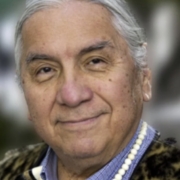
Patrick Anderson is an Alaska Native leader whose life work weaves ancestral values of humility, reciprocity, and collective responsibility into the modern fabric of organizational and community transformation. An attorney by training, he has devoted his career to advancing the well-being of Alaska’s Native peoples through education, innovation, and the restoration of relational balance in human systems. A former CEO of two IHS compacting facilities in Alaska and Tribal Health Director for the Makah Tribe in Washington State, Mr. Anderson successfully helped extend IHS-based healthcare to community-based non-Natives under Title IV compacting while retaining indigenous practices for multi-generational trauma healing. He envisions a Village of the Future integrating Indigenous values with modern systems design.
Patrick honors the truth that systems thrive when relationships are strong, learning is shared, and each part of the whole is valued. Guided by the wisdom of elders and informed by modern systems theory, Patrick continues to build bridges between traditional knowledge and contemporary practice. His work reflects a belief that lasting innovation arises not from control or competition, but from empathy, curiosity, and respect for the living systems of people, processes, and nature. Through this synthesis of old and new ways of knowing, he seeks to nurture a future where Indigenous principles shape sustainable and humane pathways for all communities where Indigenous values of Space, Place, Time, Being, and Becoming are used to grow a tribal community that is transformed through the guidance of Elder Wisdom and Translational Leadership provided by Traditional Ecological Knowledge (TEK) and Traditional Relationships.
(505) 226-3073
POB 3085, Kirtland, NM 87417
and POB 744, Farmington, NM 87499