Differences Don’t Have to Create Divisions

Ramah Chapter

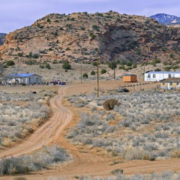
I grew up in the Ramah Navajo community in western New Mexico. Many people don’t realize there are three Navajo bands outside of the main Navajo Nation reservation, Ramah Navajo, Alamo Navajo, and To’hajiilee. We’re still Navajo, but our communities have their own history and identity.

Looking back, I know I had a different experience than a lot of kids growing up in my community. Both of my parents valued education and earned their master’s degrees, so I was raised in a home where learning was important. We weren’t rich, and I remember when I was little we didn’t have things like running water or electricity, but my parents worked hard and made sure we had what we needed. It wasn’t until I came back home and worked in the community that I truly realized how many families were facing challenges that I had never experienced myself.

I was raised in a traditional Navajo home by parents, grandparents, and relatives who taught me our way of life. Some of my best memories are of herding sheep, shearing sheep, chopping wood, and taking part in ceremonies. Those experiences taught me responsibility, respect, and the importance of family. Like many people, I’ve drifted away from those teachings at different times in my life, but they’ve always brought me back. Those values continue to guide me today.

After high school, I attended SIPI in Albuquerque and earned my associate degree before transferring to Haskell Indian Nations University. Football gave me the opportunity to continue my education, and I eventually earned my bachelor’s degree in American Indian Studies. College wasn’t easy. I had barely graduated from high school and quickly realized how much I needed to catch up academically. I had to take developmental classes and work harder than I ever had before. Looking back, that experience taught me that success isn’t about where you start. It’s about whether you’re willing to keep moving forward.

After college, I returned home and worked at the wellness center in Pine Hill. That’s when I began seeing my community from a different perspective. I wasn’t just someone who grew up there anymore, I was someone trying to help.

One of the biggest challenges I saw was the lack of opportunity. Jobs are limited, and the nearest towns with employment are about an hour away. For many families, transportation, childcare, and even gas money become barriers before they ever have a chance to build a better future. When those challenges continue for generations, it’s easy to understand why people can feel stuck.

Working with young people changed the way I looked at things. I spent a lot of time encouraging students to think about life after high school. I told them they didn’t have to follow just one path. College is one option, but so are skilled trades, healthcare, or any career that gives them the opportunity to build the life they want.

Sometimes the hardest part wasn’t helping them find opportunities. It was helping them believe those opportunities were possible.

Many students were afraid to leave home. Others believed they couldn’t afford college or that they weren’t capable of succeeding. I understood those fears because I had my own struggles in school. I always tried to remind them that where you begin doesn’t have to determine where you end up.

I also realized that supporting youth means supporting families. Many children I met were being raised by grandparents, older siblings, or a single parent. Parents often worked long hours or struggled just to provide the basics. During the summer, we tried to create activities that gave kids a safe place to spend their time. Sometimes they simply needed somewhere they could have fun, eat a meal, and feel like someone cared about them.

Over the years, I’ve also seen how mental health continues to affect our communities. Too many people avoid asking for help because they’re afraid of being judged. On the reservation, everyone knows everyone. People worry about what others might say if they walk into a clinic or ask for counseling. That stigma keeps many people from getting the support they need.

I always encouraged people to take care of themselves, whether it was managing diabetes, checking their blood sugar, or talking to someone when life became overwhelming. Asking for help isn’t weakness. It’s one of the strongest things a person can do.

Today’s generation faces challenges that my generation didn’t. Social media constantly shows young people lives that seem perfect, making it easy to compare themselves to people they’ve never met. I think that creates a different kind of pressure than we experienced growing up. More than ever, young people need positive role models who remind them that their value isn’t measured by what they own or what they see online.

Being raised in a traditional Navajo home gave me a strong sense of who I am. My grandparents taught me our way of life through everyday experiences, and those lessons have stayed with me. Over the years, I’ve seen disagreements between people who follow the traditional way and those who attend different churches. Sometimes those differences create division within the community and even within families. I don’t believe it has to be that way. I respect everyone’s beliefs, and I hope we can continue finding ways to support one another while making sure our traditional teachings are passed on to the next generation.

Today, my daughter carries both parts of her family’s traditions. Watching her continue her education and begin graduate school has been one of the proudest moments of my life. It reminds me that every generation has the chance to go a little farther than the one before.

Although I now live in Albuquerque, Ramah Navajo will always be home. I left because I wanted greater opportunities, but I never left behind the lessons my family and community gave me. Everything I learned from my grandparents, from my parents, from football, from college, and from serving my own people continues to shape the person I am today.

If there’s one thing I’ve learned, it’s that change doesn’t happen all at once. It starts with giving people hope, creating opportunities, and reminding our young people that they are capable of building a future they can be proud of without ever forgetting where they come from.

R.H., Ramah Chapter, July 23, 2026
Savara’s Story — The Carefulness of Traditional Medicine

Shiprock Chapter

I was born and raised in Shiprock, New Mexico. Growing up on the Navajo Nation, I was surrounded by family, culture, and the teachings passed down from our elders. One of my earliest memories is also one of the experiences that shaped how I viewed healthcare for the rest of my life.

My parents have often shared the story of when I became very sick at around four years old. Although I was very young, I surprisingly remember little bits and pieces of that experience because it was so traumatic., My parents noticed that I had a high fever and were worried, so they took me to the Shiprock hospital. After being checked, the provider told my parents that it was probably just a common cold because it was winter. They were told to continue giving me medicine, make sure I drank plenty of fluids, and that I would be okay.

But my parents knew something was not right. By that evening, my condition had gotten worse. My mom noticed that I was no longer wetting my diaper, and as a mother, she knew that was a sign that something serious was happening. Wanting to find answers, my parents took me to a Navajo medicine man.

During the ceremony, the medicine man recognized that something was wrong inside my body, specifically around my stomach and bladder area. He advised my parents that I needed to return to the hospital right away.

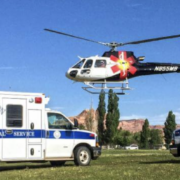
When we went back, doctors discovered that I had a severe urinary tract infection that had already caused damage to my kidneys. I was flown to the University of New Mexico Hospital, where I spent about two weeks receiving treatment. My parents were later told that I should not have been sent home during that first visit because my condition required more attention.

That experience stayed with me. At such a young age, I developed a fear of hospitals, doctors, and nurses. I struggled to trust the healthcare system because my first experience made me feel like my health and my life had not been taken seriously. That fear followed me into adulthood.

Years later, after graduating high school, I moved to Gilbert, Arizona, to attend college. I was working full-time while also going to school full-time, doing everything I could to build a future for myself. As I approached my twentieth birthday, my life changed again.

In March, I suddenly became very sick. I began experiencing unbearable headaches that made it difficult to sleep, focus, or continue my daily life. Then I noticed painful patches developing on my scalp. They became red, irritated, and started bleeding. The pain spread from my scalp down the back of my neck, into my hands, and throughout my legs. Nothing seemed to help. The pain became so overwhelming that I could no longer work or attend school.

For a while, I kept my struggles to myself. I didn’t want my family to worry, but eventually I called my parents and told them what was happening. Being the youngest of eight children, my family immediately became concerned. They told me to come home so we could figure out what was wrong.

I made the difficult decision to leave my job, put school on hold, and return to Shiprock.

When I came home, my parents took me to a Navajo medicine man. Through ceremony, he told my father that he needed to gather specific herbs for me to use in my healing. My father followed those instructions, and as I began taking the herbs, I slowly started to feel better. Within that week, the pain began to lessen, and the painful patches on my skin started to heal.

That experience changed me. It reminded me of the powerful connection we have with Mother Earth and the medicines she provides. During one of the most frightening times in my life, I found comfort in the knowledge that our people have carried for generations.

I am grateful that our culture still has medicine people who understand the healing power of our plants, herbs, and ceremonies. Mother Earth provides us with so much medicine, food, and everything we need to survive. But it is our responsibility to respect her, protect her, and learn from the knowledge our elders carry.

Today, I believe it is important for our younger generations to spend time with our elders and learn about the medicines that have always been a part of our people. Many of these traditional medicines have helped people with different illnesses and health challenges, and this knowledge is something that should never be forgotten.

My journey taught me that healing can come in many forms. I am thankful for modern medicine and the care that helped me survive, but I am also thankful for the traditional teachings, ceremonies, and medicines that connected me back to my culture and reminded me of the strength that has always been within our people.

Savara T, Shiprock Chapter, July 23, 2026

When Words Change a Family

Tse Dáá K’áán

I never imagined my family would go through something like this.

It started with my brother not feeling well. At first, we all thought it was just a cold. We told him to get some rest and figured he’d be back on his feet in a few days.

Instead, each day he became weaker.

His stomach started hurting. His legs began swelling. Soon his whole body ached, and before long he couldn’t even get out of bed.

Like many Diné men, he didn’t want to go to the hospital. He kept telling us he’d be alright and that he could get through it on his own.

After about a week, we knew something wasn’t right anymore. We called an ambulance.

That was the beginning of one of the hardest weeks our family has ever lived through.

At the hospital, doctors found what they believed was a black mass in his pelvic area. They told us it was likely cancer. The next day he was flown to Grand Junction, Colorado, to see cancer specialists.

Our world stopped.

One week earlier my brother had been walking around like anyone else. Now our family was hearing words like “Stage 4,” “metastatic bladder cancer,” and “it has spread to his lungs.”

No one could clearly explain what was happening, but those words were enough.

Fear took over.

We drove back and forth between New Mexico and Colorado, trying to stay by his side while also trying to understand what the doctors were telling us.

Then they handed us letters recommending that we have our home tested for radon and our community tested for uranium, arsenic, and benzene exposure.

That’s when everything became bigger than my brother.

We started asking ourselves questions that no family wants to ask.

If he was exposed… were we all exposed?

What about our children?

What about our neighbors?

A dark cloud settled over our family.

We were grieving someone who was still alive.

About a week later, the doctors came back with different news.

The black spots they believed were cancer weren’t cancer at all.

They were a severe infection.

Something that could be treated with antibiotics.

My brother had been misdiagnosed.

The doctors apologized, but by then our family had already lived through panic, grief, confusion, fear, and sleepless nights. Even though my brother was going to live, the emotional weight we carried didn’t disappear overnight.

That experience changed the way I see healthcare.

I realized that healing isn’t only about medicine. It’s also about communication. The words spoken by a doctor don’t stop with the patient, they travel through an entire family.

Sometimes those words stay with you long after the diagnosis has changed.

Joey Tsosie – Tse Dáá K’áán, July 2026

Finding My Way Back

Thoreau Chapter

I grew up in Gallup, New Mexico, but my childhood was filled with instability. My sister and I experienced poverty, domestic violence, addiction, and homelessness. Some of my earliest memories are walking through town with our heads down, hoping to find enough money on the ground to buy something to eat. There were times we lived with relatives, in shelters, and even slept in our car.

When I was twelve years old, LDS missionaries came to our home, and I was baptized shortly after. Around that same time, my father returned to our lives for the last time. After a violent incident at home, everything changed. My mother struggled to care for me while we were moving from place to place, and eventually she reached out to the church for help.

Just a few weeks after my thirteenth birthday, I left New Mexico for Utah through the Indian Student Placement Program. I met my first foster family at an ice cream shop in Provo, not knowing that I would spend much of my childhood growing up away from home. Leaving the reservation at such a young age meant I slowly lost my connection to my Navajo culture, language, and identity.

For many years, I carried shame instead of pride. I spent much of my life trying to fit into a world where I often felt different. It wasn’t until I became a mother that I began to recognize how those experiences had affected both me and my children. After years of reflection, I made the difficult decision to leave the church in 2017 and begin finding my way back to myself.

Today, I live in Kansas City, but my heart is still connected to the Navajo Nation. I am reconnecting with my family, learning more about my culture, and discovering what it truly means to be Navajo. Every conversation with my relatives helps me reclaim another piece of who I am.

Looking back, I don’t let my past define me. I survived abuse, poverty, homelessness, foster care, and losing my sense of identity. Those experiences shaped me, but they also gave me compassion for others who are facing difficult circumstances.

If there’s one thing I hope for the next generation, it’s that every child has a safe place to turn. Whether it’s a mentor, a community center, or simply someone who will listen, I believe every child deserves to know they are valued, supported, and never alone.

My journey hasn’t been easy, but it has taught me that healing is possible. I’m still learning, still growing, and still finding my way home.

Verdean B., Thoreau Chapter

Survival, Addiction, and Finding Healing Through Culture

Shiprock Chapter, NM

Growing up, my life was filled with instability, overcrowding, and emotional pain. I lived with my grandmother because both of my parents struggled with alcoholism and were not consistently present in my life. My grandmother’s small three-bedroom house was packed with family members trying to survive under one roof. Some slept in bedrooms, others in the living room. My sisters and I shared a room with my grandmother because there was nowhere else for us to go.

Even though my grandmother gave us a place to stay, life was hard. I constantly felt poor and overlooked. Most of my clothes were hand-me-downs from cousins or cheap clothes from flea markets. Even when schools offered free clothes or supplies, I felt embarrassed accepting them because I already felt different from everyone else.

Alcohol was everywhere around me growing up. There were arguments, police visits, chaos, and emotional pain inside the home. As a child, I never really felt safe or emotionally supported. Looking back now, I realize love felt missing from much of my childhood. I carried loneliness and trauma for years but kept it hidden because I was afraid of being judged.

School became more of an escape than a place of support. Spending time with friends, going to parties, and being away from home gave me moments where I could forget what I was feeling inside.

Because addiction was normalized around me, I eventually turned to alcohol and drugs myself. At the time, substances felt like a way to numb everything I had been carrying since childhood. For a while, it gave me temporary comfort and escape, but deep down I was struggling with abandonment, hurt, and emptiness.

As an adult, my addiction became more severe and eventually reached a breaking point. While living in Phoenix, I stayed in terrible living conditions while trying to detox. I remember cockroaches falling from the ceiling, children crying constantly, and feeling physically sick, emotionally exhausted, and completely hopeless.

I started calling treatment centers begging for help. Through tears, I told people I was suicidal and afraid I would die if nobody helped me. But everywhere I called, I was turned away. Some places told me the waiting list was over a year long. Others said they were full.

That was one of the lowest moments of my life.

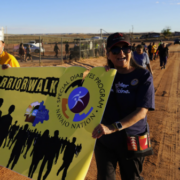
Eventually, after being kicked out and feeling completely lost, I reached out to my father. Through him, I was connected with Dennis Banks, who was organizing a spiritual walk from Alcatraz to Washington, D.C. Meeting him changed my life.

For the first time in a long time, someone saw me as more than my addiction.

He spoke to me with compassion and understanding. He taught me about Native identity, healing, history, and reconnecting with culture. Instead of making me feel broken, he reminded me I still had value and purpose.

I joined the spiritual journey beginning in Bernalillo and walked all the way to Washington, D.C. During that time, I disconnected myself from the people and environments tied to my addiction. I even turned off my phone so I could focus completely on healing.

Through prayer, ceremony, walking, and community, I slowly began rebuilding myself emotionally and spiritually.

Since 2016, I have remained sober.

Coming home was not easy because people from my past tried pulling me back into old habits. Friends reached out wanting me to drink and use again, but I knew I could not go back. I had worked too hard to heal.

Today, I believe culture can play a major role in healing Native communities. Sweat lodges, prayer, elders, singing, dancing, beadwork, and drum-making all help reconnect people to who they are. Addiction makes people lose their identity, their purpose, and their sense of belonging. Culture helps restore that.

It also makes me sad seeing how disconnected many younger Native people are from traditions and ceremonies. Many were never taught these teachings growing up, and because of that, they struggle to feel connected to who they are as Native people.

Even within my own family, teaching my children about ceremonies and traditions has not always been easy, but I continue trying because I believe culture is powerful medicine.

My story is one of pain, survival, resilience, and healing. It reflects the lasting effects of trauma, poverty, addiction, and lack of support, but also the strength that can come through compassion, community, and reconnecting with culture.

Through sobriety and spiritual healing, I transformed my life. And now, I carry that hope forward for the next generation.


Shayla D., Shiprock Chapter , June 2026

Raised by Strong Women

Toadlena/Two Grey Hills Chapter

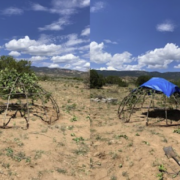
I grew up in a small community called Sand Springs in Red Valley, where my grandparents had their homestead. During the first years of my life, my family lived in a traditional Hogan. My mom was a single parent raising my older brother, my sister, and me. She worked hard to support us and later went back to school to earn her GED and certificate so she could create a better future for our family.

Because of that, much of my childhood was spent being raised by my aunts.

The women in my family shaped who I am today. My aunts stepped in to help care for me while my mom worked toward building a better life for us. Growing up surrounded by strong Native women taught me resilience, independence, and the importance of helping one another during difficult times. I learned early that family is what carries you when life becomes heavy.

Although my family has land in Sand Springs, we have lived in Two Hills for many years. My family has rented there for over two decades, and over time it became the place I call home. I attended Shiprock High School before leaving for college. After high school, I attended the University of Texas for one semester, but financial challenges made it difficult to stay far from home. Eventually, I transferred closer to home where college felt more realistic and affordable for my situation.

Outside of school, pageantry became a big part of my life. My sister and I participated in pageants throughout elementary school, middle school, and high school. As I got older, I stayed involved by helping organize events, judging pageants, and supporting younger contestants in the community. Those experiences helped me build confidence and leadership skills while strengthening my connection to my community and culture.

Over the past few years, I’ve also become more interested in Navajo Nation government and leadership. As a business major, I started paying closer attention to budgeting, decision-making, and how tribal leadership impacts everyday people. I began realizing how many young people feel discouraged because opportunities can seem limited or difficult to access.

I believe we need stronger support systems for students and young adults. More leadership opportunities, internships, mentorships, and educational support could help younger generations feel more hopeful about their future here at home instead of feeling like they have to leave.

At the same time, I believe protecting our culture and language must remain a priority. Many younger people struggle to speak Navajo fluently or feel disconnected from traditional teachings. Our language and culture are part of who we are, and if we do not continue teaching them, we risk losing an important part of ourselves.

I still carry hope for the future of our people. I believe if we continue investing in education, leadership, and cultural preservation, younger generations will feel stronger, more connected, and more confident about building their future within the Navajo Nation.

Jerrick J., Toadlena/Two Grey Hills Chapter , June 2026

Just Trying to Build a Home

Tsayatoh Chapter, NM

I grew up in Pretty Rock, a small community near Gallup. Most of my childhood was spent living with my grandmother on the Navajo reservation. Even though I lived on the reservation, I went to school in Gallup, spending years riding the bus back and forth between home and town. That became part of everyday life.

After graduating high school in 2006, I continued my education and earned a welding certification. Over the years, I worked different jobs, including refinery work, law enforcement, and telecommunications. No matter where I worked though, my goal was always the same, to build a stable life and home for my family back on the reservation.

A couple years ago, my wife and I bought a mobile home with plans to place it on our homesite in Black Hat. At first, we thought it would be a simple process. Instead, it became one of the most stressful experiences our family has gone through.

I quickly learned how difficult and confusing the homesite lease process can be. At chapter meetings, I heard people say they had already been waiting five to eight years and were still trying to get approved. Hearing that discouraged us. There were times my wife and I wondered if we would ever truly be able to move into our home.

The process involved endless paperwork, phone calls, meetings, and trying to understand requirements that often were not clearly explained. A lot of the responsibility fell on me to keep checking in, following up, and making sure our application did not get forgotten. I realized that if you stop pushing, things can easily sit there for months or years.

After staying persistent and continuing to ask questions, I was finally able to receive my homesite lease within nine months, which was much faster than what many others experience. But even after that, the challenges did not stop.

Getting water and electricity connected became another long process involving different offices, agencies, and utility companies. At times it felt like we were being pushed aside or forgotten. Trying to manage all of that while balancing work and family responsibilities became emotionally exhausting.

Then, just before Christmas, we finally got running water.

I still remember how emotional that moment felt for my family. Something as basic as turning on a faucet became a symbol of relief, stability, and progress after years of uncertainty. Soon after, our electricity was connected too.

A lot of people outside the reservation take those things for granted. But for many Navajo families, access to water and electricity is still a struggle.

When I think about the future, I hope my children and future generations will not have to go through the same hardships my family experienced just to build a home. I want to see a Navajo Nation where families can access homesites, utilities, and infrastructure without spending years fighting through difficult systems.

I believe our communities have the potential to grow and improve, but it will take stronger systems, better leadership, and continued support for families trying to create a better future.

My story is really about perseverance.

No matter how frustrating the process became, I kept pushing forward because all I wanted was to build a stable home and life for my children.

Brad, Tsayatoh Chapter, June 2026

Connection Is Our Strength

Church Rock, NM

I grew up in Church Rock surrounded by family, culture, and the teachings that continue to shape who I am today. Even though life on the reservation came with challenges, I was raised to value connection, responsibility, and community.

Both sides of my family had a strong influence on me growing up. My father’s family lived throughout places like Dennehotso, Blanding, Farmington, and Monticello, while my mother’s family lived in Pine Dale and Oak Springs. Because of that, I spent a lot of time traveling with my family across different communities throughout the Southwest.

Those experiences taught me a lot. My father believed it was important for his children to see more than just one place. Traveling allowed me to experience different communities and ways of life while still staying grounded in my Navajo identity. Looking back, I realize those experiences broadened my perspective and strengthened my appreciation for family and culture.

Today, my family still lives on the Navajo Nation, and my father purchased land in James Town NM where we continue working toward building something for the future. To me, land is more than property. Land is connection. It brings people together through family, culture, gathering resources, ceremonies, and everyday life. The land teaches us how to live and how to stay connected to one another.

I also believe nature carries teachings within it. Trees, plants, water, and the environment around us all hold meaning in Navajo life. Our identity is rooted in our relationship with the land.

At the same time, I see many challenges facing Native communities today. One of the biggest is the lack of mental health and substance use resources available on the reservation. Even when services exist, many people struggle to understand complicated healthcare systems, insurance paperwork, Medicaid, or Arizona access programs. A lot of our people, especially elders, feel overwhelmed trying to navigate systems that were never explained in ways that are easy to understand.

I believe information needs to be shared in simpler ways and in the Navajo language so people feel more comfortable accessing services and asking for help.

I also think younger generations are struggling with disconnection. Technology and social media have benefits, but they can also pull people away from the world around them. Many young people spend so much time online that they lose connection to community, culture, and even themselves.

But despite all the challenges, I believe Navajo people carry many strengths that outsiders often overlook.

One of those strengths is faith. Spirituality continues to help many people stay strong through difficult times. Another strength is resilience. Even living in rural areas where families travel long distances just to get groceries, healthcare, or services, our people continue working hard and supporting one another.

And one thing I think is especially powerful in Native communities is humor.

Even during difficult times, our people still find ways to laugh together, make jokes, and lift each other up. That ability to bring joy into hard moments is a form of strength and healing.

When I reflect on my life, I see both the beauty and the challenges of growing up on the Navajo Nation. My experiences taught me the importance of family, culture, faith, and connection to the land. They also showed me the gaps that still exist in mental health care, substance use resources, and accessible healthcare education.

But more than anything, my story reflects the resilience of Native communities and the strength that still exists within our people today.

Tyrone, Church Rock Chapter, June, 2026

Our Language Is Medicine

Shiprock, NM

Our language is who we are. It is powerful. It is medicine for our Diné people.

For more than two years, I’ve been doing radio talks about land stewardship, our culture, our laws, and our language. One thing I continue to believe is this: we cannot keep trying to build our future only through someone else’s worldview. Too often, we negotiate schools, healthcare, government, and even our identity through English and Western ways of thinking first. Then we turn around and try to fit our people into systems that were never built from our teachings.

That weakens our ability to advocate for ourselves as Diné people.

Everything must begin from our own foundation our language, our culture, and our understanding of the world.

Our Creator instructed us (Diné) to move into this area. We are not immigrants to this land. We belong within these four sacred mountains. That understanding came long before the Navajo government, before English, before outside systems. Those things are secondary. Our language and teachings are primary.

Sometimes I think we have forgotten that.

It’s admirable that young people leave to get degrees and educations, but literacy in the outside world is not the same as understanding who you are as Diné. Too many young people come back and see their grandparents as “uneducated” because they only speak Navajo. But linguists say Navajo is one of the most difficult and complex languages in the world. Our elders carry knowledge, memory, teachings, and ways of thinking that cannot fully be translated into English.

A lot of my understanding came from my cheii, who was a medicine man. His songs and stories were part of his medicine, passed down long before 1868 through generations of ancestors. But when he passed, much of that ended too. At the time, we thought we were too modern, too educated, too advanced for those ways. Looking back now, I think he probably saw us as people slowly losing who we were.

That is why protecting our language matters.

Language is not just words. It is governance. It is clan relations. It is how we understand responsibility, wellness, land, and one another. If we lose the language, we lose the roots that hold everything together.

And if we want a strong future as Diné people, we have to retrace those roots and remember what guided us before everything else.

Tom Chee, Shiprock Chapter

June 2026

You Have to Be There to Help

Tuba City, AZ

A few years ago, I had the opportunity to become a  caregiver for my nephew, Brandon. Looking back now, I  realize it was never just a job. It was about family. It was  about being another set of hands, another source of  support, and making sure someone I loved had the care  and dignity he deserved. 

Every morning began the same way. I’d wake Brandon  up, help him bathe, get dressed, give him his medicine,  and make sure he was ready for school before helping him  onto the bus. While he was away, I’d wash his bedding,  clean his room, and prepare everything so he’d come  home to a comfortable space. After school we’d spend  time together watching television, going outside, or  simply enjoying each other’s company. Before long, those  moments became part of my everyday life, and I wouldn’t  have changed them for anything. 

Because Brandon is family, trust came naturally. He knew  me, and I knew him. I wasn’t someone walking into his  home for the first time. I was someone who loved him  unconditionally. That trust made all the difference. During  difficult moments, when he became frustrated or  overwhelmed, I learned to stay patient, remain calm, and  help him work through them. I had also received seizure  training, and whenever I needed guidance, my sister was  only a phone call away.

Being Brandon’s caregiver changed the way I see people. 

It taught me patience, compassion, and the importance of  taking initiative without waiting to be asked. If something  needed to be done, you simply did it. Caregiving isn’t  about checking off a list of tasks, it’s about helping  another person live with dignity, respect, and the best  quality of life possible. 

It also reminded me how powerful family can be. 

Brandon has always had a way of bringing our family  together. Everyone watches out for him. If he ever needed  anything, every aunt, uncle, cousin, brother, and sister  would stop what they were doing to help without  hesitation. That’s simply who we are. We never saw  Brandon as someone who held us back. Instead, he  reminded us every day what unconditional love, patience,  and family truly mean. 

When people ask me what makes someone a good  caregiver, I always tell them it takes more than training. 

You have to have an open heart. 

You’re stepping into someone’s home and becoming part  of their daily life. Families are trusting you with the  person they love most. That kind of trust isn’t given  automatically, it has to be earned through kindness,  compassion, responsibility, and showing up every day  because you genuinely care.

If you’re only there for a paycheck, people will know. 

But if you’re there because you truly want to help, you’ll  do whatever needs to be done without thinking twice. 

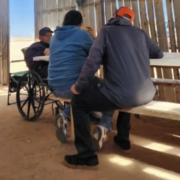
I also hope our communities continue becoming more  welcoming and accessible for people with disabilities. We  need more accessible parks, chapter houses, buildings,  and community events where everyone feels included and  valued. Disability shouldn’t only be acknowledged during  special events or awareness months. Inclusion should be  something we practice every single day. 

Looking back now, I realize caregiving gave me far more  than I could have ever given Brandon. 

It taught me compassion, responsibility, patience, and the  importance of putting someone else’s needs before my  own. Those lessons have shaped the person I am today,  and they’ll continue guiding me wherever life leads me.  Brandon may never fully realize how much he taught me,  but I will always be grateful for the time we shared and  for the privilege of being there when he needed me most.

— Craig Brown, June 2026, Tuba City Chapter, AZ