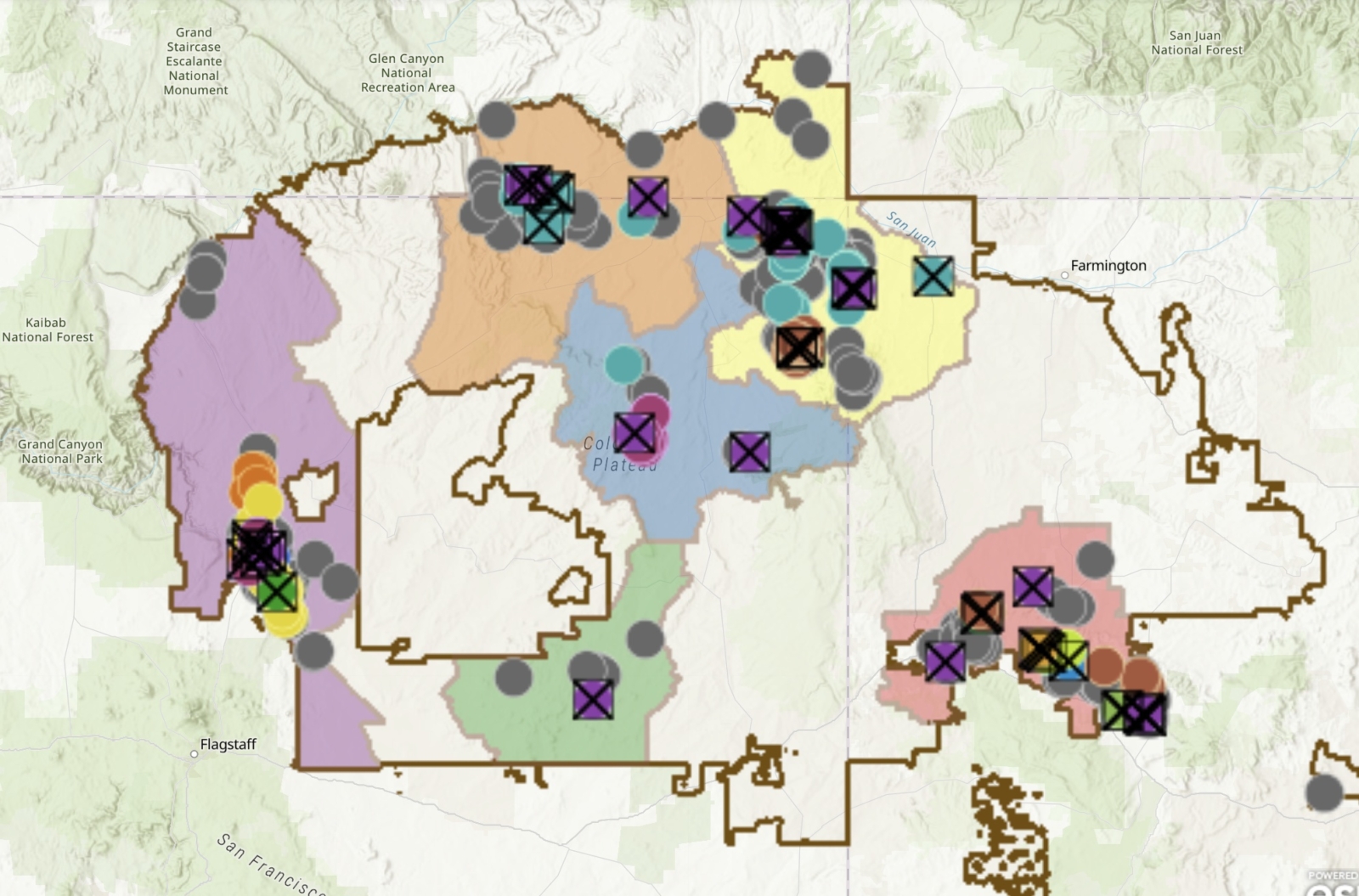
Uranium Contamination Sites
Multiple Superfund Contamination Sites. A Superfund site is an area of land so contaminated by hazardous waste that the U.S. Environmental Protection Agency (EPA) is obligated to clean up, and has furter authority to identify responsible parties to perform the cleanups or reimburse the government for the cost of the work, because these areas pose a significant risk to the environment or human health.
Among the more than 500 abandoned uranium mines are multiple Superfund sites cross the Navajo Nation embedded in every region including:
- The Northeast Church Rock Mine and UNC Mine (east of Gallup); Church Rock and surrounding mines were designated a Superfund site in 1983.
- Lukachukai Mining District (Mesa V Complex and Tronox Mines in the Lukachukai mountains southwest of Shiprock), designated a Superfund site in 2024.
- Tse Tah Area Mines in the norther region encompassing Sweetwater, Teec Nos Pos and other chapters. Tse Tah Area Mines include 31-37 abandoned uranium mines.
The status of these abandoned sites is one of long-overdue action, with major cleanup efforts finally beginning or being secured for the most contaminated areas, while others are still mired in decades of assessment and planning.
The Church Rock uranium mill spill of July 16, 1979, is a foundational event in the history of uranium contamination on the Navajo Nation. It is a story of a catastrophic failure, a legacy of illness, and a profound disregard that continues to shape the fight for justice today.
Early on the morning of July 16, 1979, an earthen dam at the United Nuclear Corporation (UNC) uranium mill in Church Rock, New Mexico, failed. The breach released a torrent of 94 million gallons of radioactive mill wastewater and 1,100 tons of solid uranium tailings into the Rio Puerco. The spill was so large that it contaminated an 80-mile stretch of the river, flowing through Navajo communities in New Mexico and Arizona.
By volume, the Church Rock spill is the largest release of radioactive material in U.S. history. It released more radioactivity than the partial meltdown at Three Mile Island, which had occurred just four months earlier in March 1979.
The immediate effects were devastating. The acidic wastewater (with a pH of 1.5) was so toxic it caused burns and blisters on the legs of livestock and people who waded through it . The spill killed crops, contaminated the land, and left a legacy of fear. Livestock died, and families stopped gathering herbs from the river banks . Communities living near the spill site continue to suffer from disproportionately high rates of cancer, kidney disease, and other health issues.
Status of Uranium Remediation. The cleanup process has been agonizingly slow. The EPA and the NNEPA have identified 46 priority mines based on concerns such as radiation levels, how close the mines are to homes and the possibility of contamination affecting water. EPA reports that 44 of these priority mines are in the assessment phase. Assessment can involve radiation scanning, soil and water sampling, and biological and cultural surveys. This work helps determine what contamination is present, how far it may have spread and what needs to happen next.
Federal and Navajo Nation agencies are also working under the Ten-Year Plan to Address Impacts of Uranium Contamination on the Navajo Nation. This work goes beyond abandoned mines. It also looks at contaminated homes and structures, water, former uranium mill sites, health concerns, community outreach and other issues connected to uranium.
Major Remediation Projects include:
- Northeast Church Rock Mine
- Old Church Rock Mine
- Quivira Mines
- Mariano Lake Mine
- Mac and Black Jack Mines
- Ruby Mines
- Section 32 and 33 Mines
- Haystack Mine