Systems-Based Public Health in the Navajo Nation
Providers and community leaders are encouraged to utilize established public health principles: addressing health disparities through a holistic team approach and integrated historical wellness practices. For professionals new to the unique jurisdictional landscape of tribal health, we recommend the National Indian Health Board (NIHB) training modules for foundational knowledge on cross-agency coordination.
Providers and community leaders are encouraged to utilize established public health principles: addressing health disparities through a holistic team approach and integrated historical wellness practices. For professionals new to the unique jurisdictional landscape of tribal health, we recommend the National Indian Health Board (NIHB) training modules for foundational knowledge on cross-agency coordination.
NAVIGATING INTEGRATED HEALTH SYSTEMS
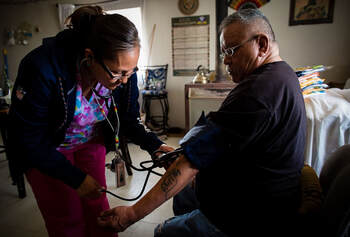
A home visit on the Navajo Nation provided by Growing in Beauty, a tribal program
Healthcare delivery within the Navajo Nation involves a complex network of public health systems. Because these systems lack a centralized oversight body, families often face significant hurdles in accessing services across state and tribal lines. A comprehensive understanding of these interlinked systems is necessary to ensure patient rights and service continuity.
The primary systems include:
The primary systems include:
- Indian Health Service (IHS): The Navajo Area IHS operates hospitals and clinics at key population centers. Services are provided in fulfillment of federal trust responsibilities. When specialized care is unavailable on-site, IHS may refer patients to off-reservation facilities.
- Medicaid Coordination: Tribal members enrolled in Medicaid qualify for expanded benefits, including critical Non-Emergency Medical Transportation (NEMT), which bridges the gap between rural chapters and regional healthcare hubs.
- Tribal Health Corporations (PL 93-638): Under Federal Law (P.L. 93-638), the Navajo Nation exercises self-determination by independently operating hospitals and health centers. These corporations expand local access and are governed by tribal self-governance compacts.
- Navajo Nation Division of Health: These programs provide essential services—including nutrition, behavioral health, and community outreach—in coordination with federal and state partners through master healthcare contracts.
- Arizona, New Mexico, and Utah Medicaid Frameworks: Because the Navajo Nation spans Arizona, New Mexico, and Utah, families must navigate three distinct state-based assistance programs in Arizona, New Mexico, and Utah: These state-contracted programs are essential for residents within their respective portions of the reservation. Navigating these requires specialized jurisdictional knowledge to ensure families do not lose coverage when crossing internal state boundaries for care.
Holistic Planning & Traditional Observances
Effective wellness planning for children and youth with extra healthcare needs (CYSHCN) incorporates Language Access and Historical Cultural Observances. Programs like Growing in Beauty demonstrate the value of home-based, community-led support. We advocate for Áłchíní hózhóójí bá Nahat'á, a historically-grounded model of wellness that integrates traditional family structures and ceremonies to achieve long-term health stability.
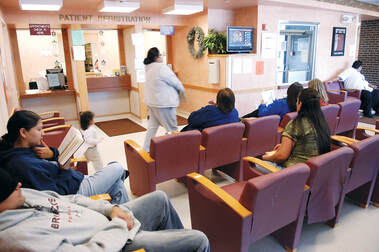
Often a long wait at a healthcare facility