Diné Bá Álchíní Yił Ádaaní / Navajo Family Voices
  • Home
  • About
    • About Us
    • Our Staff
    • Advisors
    • Usage
  • Healthcare
    • Guide to Healthcare on the Navajo Nation
    • Medical Centers and Health Facilities
    • Navajo Nation Adult Guardianship Act of 2014
    • Uranium Health on the Navajo Nation
  • Toolkit
    • Navajo Nation Chapters – Information and Contacts
  • Stories
    • Community Stories
      • Share Your Own Stories
    • Resource Stories
  • Search
  • Menu Menu
  • Facebook
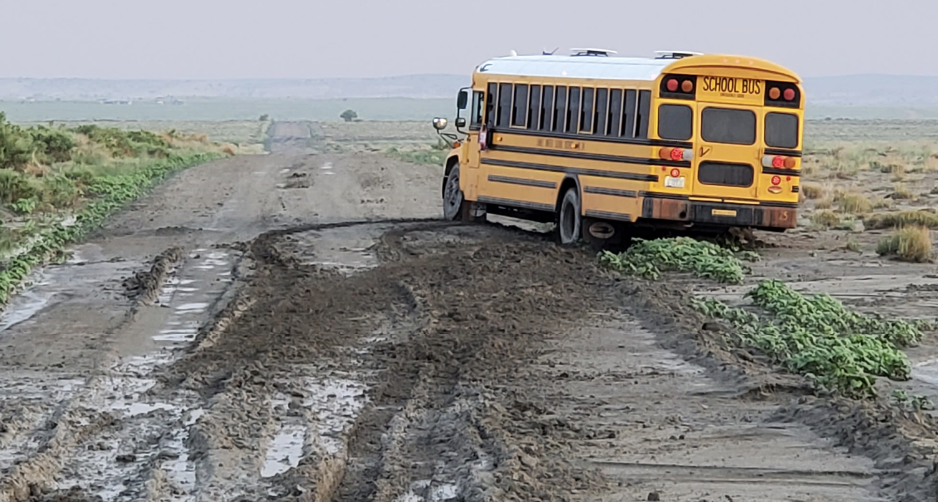
School bus stuck in mud on Navajo Nation unpaved road

This Is How We Stayed Healthy

Sanostee NM 

When I was younger, winters were different. Snow would start in October and last into May. I remember in my junior year of High School, 1980, everything was clear on May 5th, but the next morning we woke up to a foot of snow. There were no “snow days” back then. The bus still came down the dirt roads, and we walked half a mile to meet it, snow or sunshine.

Our parents would wake us up before sunrise, telling us to go run. We would run in the dark, calling out so the Holy People would hear us. That was part of staying strong and living a long life.

In the summer, our family went to the mountains to gather berries and plants. In the fall, we collected juniper, piñon, oak, and roots. We boiled them like tea that was our medicine. We didn’t depend on clinics the way we do now. We knew how to take care of ourselves.

Today, I see things differently not just from experience, but from the work I’ve done. I’ve been working with grazing and land management since the early 2000s, and one thing is clear: if we don’t take care of the land, it won’t take care of us.

I’ve seen what overgrazing can do. I’ve seen how water sources affect everything grass, livestock, and our way of life. But I’ve also seen change. When people work together and pay attention to what’s being shared policies, plans, and knowledge we can restore balance.

Everything is connected land, water, animals, and people.

What we knew back then wasn’t just tradition, it was a system of survival and wellness. That’s something we need to remember if we want to move forward.

— Alonzo Cohoe, Sanostee, May 2026

https://navajofamilies.org/wp-content/uploads/2026/05/schoolbus061426.png 502 938 skessa https://navajofamilies.org/wp-content/uploads/2026/07/navaho-family-voices.png skessa2026-05-13 21:21:502026-08-04 17:09:58This Is How We Stayed Healthy
Community Stories

  • “How Come You Never Taught Us?”
  • Portrait of Emily Ellison
    Foundations of Who I Am
  • Portrait of Shawna Ann Claw
    Coming Full Circle: Giving Back
  • Portrait of Christopher “Def-I” Mike Bidtah
    The Power of Hip-Hop to Inspire Change
  • Young man refilling water tank
    Differences Don’t Have to Create Divisions

Sanostee NM 

When I was younger, winters were different. Snow would start in October and last into May. I remember in my junior year of High School, 1980, everything was clear on May 5th, but the next morning we woke up to a foot of snow. There were no “snow days” back then. The bus still came down the dirt roads, and we walked half a mile to meet it, snow or sunshine.

Our parents would wake us up before sunrise, telling us to go run. We would run in the dark, calling out so the Holy People would hear us. That was part of staying strong and living a long life.

In the summer, our family went to the mountains to gather berries and plants. In the fall, we collected juniper, piñon, oak, and roots. We boiled them like tea that was our medicine. We didn’t depend on clinics the way we do now. We knew how to take care of ourselves.

Today, I see things differently not just from experience, but from the work I’ve done. I’ve been working with grazing and land management since the early 2000s, and one thing is clear: if we don’t take care of the land, it won’t take care of us.

I’ve seen what overgrazing can do. I’ve seen how water sources affect everything grass, livestock, and our way of life. But I’ve also seen change. When people work together and pay attention to what’s being shared policies, plans, and knowledge we can restore balance.

Everything is connected land, water, animals, and people.

What we knew back then wasn’t just tradition, it was a system of survival and wellness. That’s something we need to remember if we want to move forward.

— Alonzo Cohoe, Sanostee, May 2026

Resource Stories

  • Four Corners Special Educaiton Day at the Navajo Museum
    Four Corners Special Education Day, Navajo Nation Museum
  • Navajo Family Voices booth at Parents Reaching Out Conference in Albuquerque
    Parents Reaching Out Conference in Albuquerque
  • Chinle Kids Day tiny cowboy
    Chinle Kids Day Community Resource Event
  • Ladiesand girls preparing dough for Navajo Tacos at Tse Daa Kaan Back to School Community event
    Back-to-School Community Event – Tse Dáá K’áán Chapter
  • Community members performing ceremony at a RAISE Summit event
    Empowering Youth Through Their Own Voices (RAISE)

Sanostee NM 

When I was younger, winters were different. Snow would start in October and last into May. I remember in my junior year of High School, 1980, everything was clear on May 5th, but the next morning we woke up to a foot of snow. There were no “snow days” back then. The bus still came down the dirt roads, and we walked half a mile to meet it, snow or sunshine.

Our parents would wake us up before sunrise, telling us to go run. We would run in the dark, calling out so the Holy People would hear us. That was part of staying strong and living a long life.

In the summer, our family went to the mountains to gather berries and plants. In the fall, we collected juniper, piñon, oak, and roots. We boiled them like tea that was our medicine. We didn’t depend on clinics the way we do now. We knew how to take care of ourselves.

Today, I see things differently not just from experience, but from the work I’ve done. I’ve been working with grazing and land management since the early 2000s, and one thing is clear: if we don’t take care of the land, it won’t take care of us.

I’ve seen what overgrazing can do. I’ve seen how water sources affect everything grass, livestock, and our way of life. But I’ve also seen change. When people work together and pay attention to what’s being shared policies, plans, and knowledge we can restore balance.

Everything is connected land, water, animals, and people.

What we knew back then wasn’t just tradition, it was a system of survival and wellness. That’s something we need to remember if we want to move forward.

— Alonzo Cohoe, Sanostee, May 2026

Contact Us

support@navajofamilies.org

(505) 226-3073

POB 3085, Kirtland, NM 87417
and POB 744, Farmington, NM 87499

Share This Site

qr code navajofamilies.org
Scroll to top