Livestock Return to the Valley
Naschitti, NM
Our Navajo customs discourage speaking of the deceased to honor their spirit. In the culture, it is believed with deep respect that mentioning the name of a deceased person can disrupt their journey to the afterlife therefore, only their history that was carryout in our lifetime is written.
My grandfather, born in 1896, passed into the spirit world in 1979 when I was twenty-seven. My grandmother died in 1955, at which time I was four years old. They had four children; one lost their life during World War II before 1940 and another passed away in 1930. My grandfather held a grazing permit assigned by the Office of Indian Affairs, under the U.S. Department of the Interior. In March 1956, this permit was transferred to his two daughters—my mother and my aunt, each receiving a portion. At thirty-one, my mother was gifted a grazing permit that enabled her to raise livestock on the Navajo Reservation, specifying a certain number of sheep units as part of her livelihood.
Since 1956, the land connected to the grazing permit became especially important to her, bringing numerous responsibilities and lessons in ranching. At thirty-one, she possessed extensive experience in horsemanship and sheep herding, using these skills for economic purposes. She played a crucial role in traditional survival, farming vegetables and fruit trees, operating a wagon with horse teams to haul wood and water from the mountains, weaving rugs, and tracking both humans and livestock. As a mother of ten—five girls and five boys—she continued her legacy. At sixty-six, she devoted herself to assisting her husband, a Dine’ medicine man who provided many traditional ceremonies.
In 1991, she passed her grazing permit to her daughter through matrilineal inheritance. The Navajo Nation reassigned the brand, encompassing sheep and a specified number of horses. This land remains vital for grazing livestock and sustaining the family’s livelihood. Sadly, grandma passed in 2010. The natural beauty and historical significance are deeply meaningful for the To’diko’zi and To’ahani clans who continue living below the beautiful sacred Chuska Mountains.
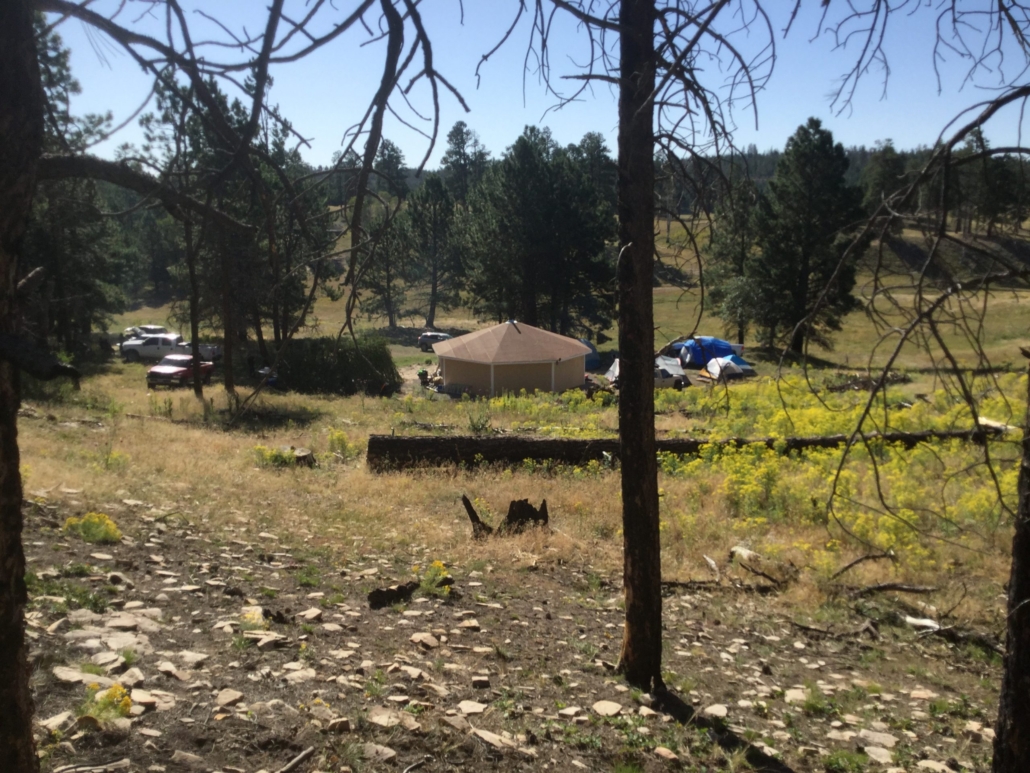
The family keeps a permanent home in the lower valley of the Chuska Mountains. The sheep camp operates in two locations: one in the lower valley and another midway up the mountain. This rotational grazing system allows the land to recover during summer and winter. When temperatures rise and grasses in the lower region dry out, livestock are moved from Haalghai to higher elevations known as Bii ta’tah. This is where the fun begins riding rams in the sheep drives for taking livestock up the mountains. This tradition has diminished over time, but it remains a notable part of our heritage.
In earlier times, supplemental feeding wasn’t required. When autumn brings steady rain or monsoons in late August and September, herds move to Bii ta’tah, where two fenced pastures await. As the weather changes later in fall, livestock return to the valley.
— Gloria Dennison, April 17, 2026, Naschitti, NM